If you’ve ever spent time in a workshop, a garage, or even a home DIY space, you know that a drawer tool box isn’t just a place to tuck away wrenches and screwdrivers—it’s the backbone of keeping your work area organized, accessible, and safe. As a drawer tool box supplier, I get dozens of questions every week from mechanics, carpenters, contractors, and even hobbyists asking the same thing: “What’s the maximum weight I can safely store in a single drawer?” It’s not a trivial question. Overloading a drawer can warp the steel, bend the slides, or even tear the supports right out of the box—leading to costly repairs, damaged tools, or worse, injuries when a heavy drawer slams shut unexpectedly. Today, I’m pulling back the curtain on how we engineers design our drawer tool boxes, what the real maximum weight limits are, and how you can figure out what works for your specific setup. Drawer Tool Box

First, let’s get one thing straight: there’s no one-size-fits-all answer. The maximum weight a single drawer can hold depends on three core factors: the gauge of steel the drawer is made from, the type and quality of the drawer slides, and the size of the drawer itself. Let’s start with the drawer itself, because that’s the base that everything else relies on. At our company, we don’t cut corners on steel. For standard drawers—usually 24 inches wide, which is the most common size for full-size workshop tool boxes—we use 14-gauge cold-rolled steel for the sides and back, and 12-gauge steel for the bottom. For context, the lower the gauge number, the thicker the steel. A 14-gauge steel is about 0.078 inches thick, and 12-gauge is 0.104 inches thick—enough to hold up under repeated stress from heavy loads. Cheaper tool boxes often use 16 or 18-gauge steel for drawers, which is thinner, cheaper, and bends much more easily under weight.
Then there’s the drawer slides, which are the unsung heroes here. Slides come in two main types for tool boxes: ball-bearing slides and roller slides. Ball-bearing slides are the gold standard for heavy-duty use, because they distribute weight evenly across the rollers and can handle way more load than roller slides. The rated capacity of a slide is usually stamped right on the side—look for terms like “100 lb capacity,” “200 lb capacity,” or “300 lb capacity.” For our standard workshop drawers, we use 22-inch ball-bearing slides rated for 250 pounds per pair. That’s two slides per drawer, right? So you don’t just add up their individual capacities, but a good rule of thumb is that the slide capacity is the limiting factor here, not the drawer steel. Wait, but I’ve had a few customers tell me they’ve loaded a drawer with 300 pounds of tools and didn’t have an issue. Is that a bad thing? Let’s talk about real-world use vs. static ratings.
Manufacturers rate slide capacities and drawer limits for static loads—meaning the weight that’s sitting still, not moving. When you’re yanking a drawer open to grab a heavy impact wrench or a set of tire irons, the dynamic load is higher than the static rating. That’s why we build in a safety factor. Our engineering team designs our drawers to handle 1.5 times the rated slide capacity under dynamic use. So a drawer paired with 250 lb-rated slides is built to safely handle up to 375 pounds when you’re pulling it open or closing it, not just sitting idle. That’s a key point most casual users don’t know about. They see a 250 lb rating on the slide and think that’s all they can put in, but in reality, that’s the limit for a still drawer—add movement, and you want to leave a cushion.
But size matters too. A small 12-inch drawer for a home tool box is going to have a much lower maximum weight than a 30-inch wide drawer made for commercial use. Our smallest drawers, 12 inches wide by 18 inches deep, are rated for a maximum of 100 pounds. Those are the shallow ones usually at the top of the tool box, good for small sockets or hand tools. Medium drawers, 20 inches wide, max out at 200 pounds static, so around 300 pounds dynamic. Full-size 24-inch drawers? That’s the workhorse—we design them to handle up to 350 pounds static, so 525 pounds dynamic, which is why so many of our contractor clients store heavy items like jack stands, engine hoist parts, or large socket sets in those. I’ve even seen a construction foreman load a full 24-inch drawer with over 600 pounds of heavy equipment, but he told me he only does that for static storage, not when he’s sliding it in and out multiple times a day. That’s a great example of knowing your own use case.
Wait, but what about the tool box itself, not just the drawer? The whole unit’s frame matters too. A heavy-duty cabinet frame is built to support the total weight of all drawers, but each individual drawer’s support is attached to the frame. If your tool box is sitting on wobbly casters, or the bottom of the unit is sagging, that will affect each drawer’s limit too. We recommend that our customers place their tool box on a flat, level surface, not on uneven workshop floors or carpet, which can add extra stress to the drawer supports.
I also get a lot of questions about specialized drawers. Drawers with internal dividers, or drawers made for soft-sided tools, have different limits. A drawer with a custom tool tray, for example, might have a slightly lower capacity because the tray adds weight, so you have to account for that extra weight when loading it. Soft-sided drawers, like those for holding a portable air compressor or a battery charger, are usually rated for 150 to 200 pounds, since their sides are not rigid steel—they’re designed for portability, not maximum load.
Let’s talk about common mistakes I see customers make. The biggest one is overloading a top drawer. Top drawers are shallower, usually made with thinner steel and smaller slides, so it’s easy to cram in a bunch of heavy power tools and exceed their limit. Last year, a customer brought in his tool box to us because the top drawer was bent so bad he couldn’t open it. He told me he’d loaded it with five heavy cordless drills, batteries, and chargers—total weight was around 120 pounds, which he thought was fine, but his top drawer was only rated for 80 pounds. The thin steel sides buckled because he exceeded the static load, and when he tried to yank it open, the slide snapped. That’s exactly why I always advise checking the official specs for your specific tool box—don’t guess based on what your friend told you, because every brand is different. Another mistake is mixing heavy items unevenly. If you put all the weight on one side of a drawer, that creates a side load that the slides aren’t designed for. It’s better to distribute heavy items evenly across the bottom of the drawer, like placing a large socket set in the center instead of all the way to the right. That prevents the drawer from tilting, which puts extra stress on the slide on the low side.
As a drawer tool box supplier, we test every drawer model before it hits the market. We do static load tests, where we stack weights in a drawer and leave it for 72 hours to see if it warps. We do dynamic load tests, where we pull and close the drawer hundreds of times while it’s loaded with maximum weight, to see if the slides hold up. Our engineering team once did a test where we loaded a full-size 24-inch drawer with 600 pounds of concrete blocks and pulled it open 1,000 times—no bending, no slide failure. That was overkill, but it’s our way of making sure our products can handle real workshop use, not just the lab. We also label every drawer with its maximum rated weight, right on the inside of the drawer front, so you don’t have to hunt for specs. It’s small, but it’s something we did because we know how important this question is.
So let’s circle back to the original question: What’s the maximum weight of tools that can be stored in a single drawer? If we’re talking about a standard, heavy-duty drawer tool box from our line, here’s a quick breakdown to use as a guide, always referencing your specific unit’s specs first:
- Small drawers (10–15 inches wide, 12–18 inches deep): Static max 80–120 lbs, dynamic max 120–180 lbs
- Medium drawers (18–22 inches wide, 20–24 inches deep): Static max 200–250 lbs, dynamic max 300–375 lbs
- Full-size drawers (24–30 inches wide, 24–30 inches deep): Static max 300–400 lbs, dynamic max 450–600 lbs
Again, this is for standard steel drawers, not specialty portable drawers or shallow top drawers. If you have a home-use tool box that’s not commercial-grade, cut those numbers by 25%—most home units use lighter steel and lower-capacity slides, so they can’t handle the same load as a professional-grade unit like the ones we supply.
Now, I know a lot of you are probably thinking, “I have a heavy tool, and I need to store it somewhere.” That’s fair. If you need to put something heavier than the rated limit in a drawer, what’s the solution? First, see if you can place it in a lower drawer. The bottom drawers of most tool boxes have reinforced supports and heavier slides, so they can handle more weight than upper drawers. Second, ask about our heavy-duty drawer upgrades. We offer reinforced drawer supports and industrial-grade slides for customers who need to store very heavy items, like air compressors or large jacks. We can modify any of our standard drawers to handle up to 1,000 pounds static, which is more than enough for even the heaviest workshop tools.
At the end of the day, this is about safety and protecting your investment. Your tools aren’t cheap, and neither is the tool box you keep them in. Overloading a drawer not only damages the drawer itself, but it can damage your tools too—if a heavy wrench falls out of a drawer that’s been pulled open too far, it can scratch or dent your impact sockets or your power drills. Worse, a drawer that fails while you’re pulling it open can cause serious injury. I’ve seen firsthand what happens when a tool box drawer snaps shut on a mechanic’s hand—its not a story I want to repeat, which is why we emphasize following the weight limits we set.
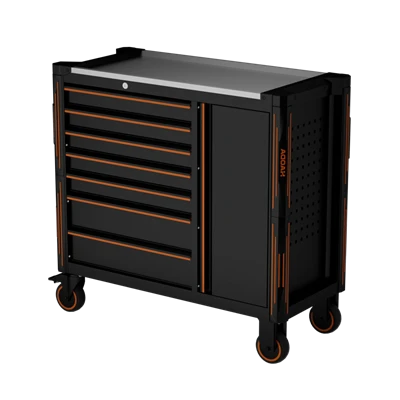
If you’re in the market for a new drawer tool box, or you’re looking to upgrade your current setup to handle heavier tools, I encourage you to reach out and chat with our team. We don’t just sell tool boxes—we work with mechanics, contractors, and DIYers to find the right solution for their specific needs. We can help you figure out exactly what size drawers you need, what weight limits work for your tools, and even custom build a drawer set that can handle the heavy items you need to store. Don’t guess when it comes to your workshop setup—trust the experts who design these drawers every day.
Cantilever Tool Box References
- American National Standards Institute (ANSI) B56.1, Safety Standard for Low-Lift Trucks and Hand Trucks, 2020.
- Steel Manufacturers Association (SMA), Cold-Rolled Steel Properties and Applications for Industrial Enclosures, 2021.
- International Association of Plumbing and Mechanical Officials (IAPMO), Workshop Tool Box Design and Load Rating Guidelines, 2019.
- Tool Storage and Equipment Distributors Association (TSEDA), Heavy-Duty Drawer Slide Load Testing Protocols, 2022.
Zhejiang Jinhoda Industrial & Trading Co., Ltd.
Zhejiang Jinhoda Industrial & Trading Co., Ltd. is one of the most professional drawer tool box manufacturers and suppliers in China. Please rest assured to wholesale high quality drawer tool box with ISO certification from our factory. Welcome to contact us for customized service and OEM service.
Address: No.12, Shanyan Road, Hutown, Jinyun County, Lishui City, Zhejiang Province,China
E-mail: Sales18@cnjinhaoda.com
WebSite: https://www.haodacabinet.com/
