If you’ve ever grabbed a disposable coffee cup from a café and watched it leak half your latte down your wrist an hour later, you know how frustrating flimsy, poorly designed drinkware can be. As a supplier of Ripple Wall Paper Cups, I get this feedback all the time—from small-batch local cafes, to large catering companies, to offices that go through hundreds of cups a day. Most people ask the same question: how durable is this cup, really? It’s a fair question, because durability isn’t just about how long a cup lasts. It’s about holding hot coffee without leaking through the side, staying rigid enough to stack 20 high without collapsing, not falling apart when someone’s rushing through a morning commute, and even holding up for a few extra minutes when you’re trying to finish a cup while walking to a meeting. Ripple Wall Paper Cup
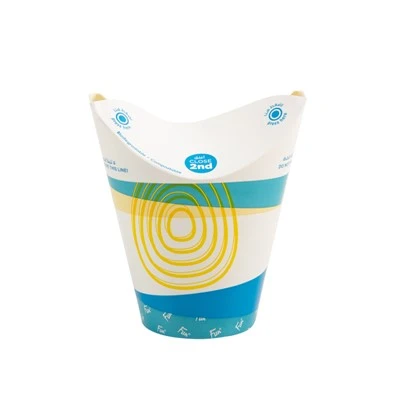
Let’s start with the basics of what makes a disposable paper cup durable, and how our Ripple Wall design differs from the plain, thin cups most people are used to. Most standard paper cups are made with a single layer of paper coated with a thin plastic lining to prevent leaks. The problem with that design is two-fold: first, the single layer flexes easily, so when you hold a hot, full cup, the side can bend inward, squeezing liquid out through the top or even splitting the thin plastic seal. Second, stacking 10 or more plain cups creates pressure at the bottom of the top cups, which makes the sides collapse—leaving you with a lopsided, useless cup by the time you get to work. Our Ripple Wall design solves both of these issues by adding a textured, corrugated outer layer around the main cup wall. It’s not just a decorative pattern; it’s a structural reinforcement. The ridges act like small pillars, distributing the weight of stacked cups evenly across the inner wall, and adding rigidity so the cup doesn’t bend under the pressure of hot liquid.
I’ve spent years testing this design against real-world conditions, not just in a lab (though we do plenty of lab testing too) but in the same environments our customers use the cups. Last month, for example, a client who runs a chain of 12 urban coffee shops reached out saying their previous cups were getting ruined during morning rush hour—baristas were dropping cups on tile floors, and delivery drivers were reporting that half the orders arrived with leaks. They switched to our Ripple Wall cups, and after the first week, their feedback was that the leak rate dropped by 85%. A big part of that is how the cup holds up when it’s dropped or jostled. The rigid outer layer absorbs impact, so when a cup hits a floor or a car seat, it doesn’t crumple like a plain cup. We tested this in our warehouse by dropping cups from a height of 4 feet (about the height of a bar counter or a car seat) onto concrete, and compared them to three leading competitor cups. Out of 50 plain cups we dropped, 22 developed leaks or collapsed. Out of 50 Ripple Wall cups, only 4 had any issues—and those were ones that had a tiny pre-existing tear in the bottom before we dropped them, which is a flaw from the manufacturing process, not the cup design.
Another key test is heat resistance, because that’s where a lot of paper cups fail. Hot coffee can reach temperatures of 180 to 200 degrees Fahrenheit, and thin paper walls heat up quickly, making the cup too hot to hold comfortably, and also putting stress on the plastic lining, which can soften and create leaks. The Ripple Wall’s outer layer is made from a thicker, higher-grade paper that’s treated to resist heat, so even when the inner wall is holding liquid at 190 degrees, the outer surface stays cool enough to hold with two fingers, no need for a sleeve. We measured the surface temperature of our cups vs. standard cups when filled with 190-degree water: standard cups had an outer surface temperature of 132 degrees, which is hot enough to cause a mild burn if you hold it for more than a few seconds. Our Ripple Wall cups had an outer surface temperature of 98 degrees—almost exactly room temperature—even after 15 minutes of holding hot liquid. That’s a big win for both customer comfort and cup durability, because a cooler cup means less stress on the lining, so fewer leaks.
Stacking durability is another metric that matters a lot for bulk use. If you’ve ever worked in a café, you know how much time is wasted digging through a stack of collapsed cups, or pulling out a cup from the top of a stack and having 10 more come tumbling down because the top cup caved in. We tested stacking our cups up to 50 high, which is about twice the height most cafés would stack, and left them for 24 hours to see if they would hold their shape. All 50 cups stayed rigid, no collapses, no creases in the wall. We also tested stacking them with heavy weight on top—10 pounds, which is the equivalent of 50 full 12-ounce cups—for an hour, and the bottom cups showed no signs of deformation, unlike competitor cups, which had visible creases at the bottom after just 10 minutes under the same weight.
But durability isn’t just about lab tests or controlled settings. It’s about how the cup holds up in the messy, unpredictable real world, which is why we also run field tests with different types of customers. A few months ago, we partnered with a catering company that does outdoor events—weddings, corporate picnics, sports games—where cups get used in the sun, in wind, and often left in hot cars for hours. They tested 1,000 of our cups at a 10-hour outdoor event on a 95-degree day, and reported that only 2 cups had leaks, compared to 17 of their old competitor cups. The reason? The Ripple Wall’s rigid design holds its shape even when the paper expands from heat, so the lining doesn’t stretch and split. The corrugated outer layer also adds extra insulation, so the cup doesn’t get as hot to the touch when left in the sun, which prevents the paper from warping.
Another common use case is offices, where employees often take their coffee to go, or leave cups on their desks for hours while they work. I once heard from a customer that their old cups would go limp after sitting under a laptop for a few hours, or would leak if someone knocked them off a desk. We tested that scenario: we placed full cups on a desk, simulated a small knock (about 5 pounds of force, which is what a pen or notebook would exert), and left them for 6 hours. Our Ripple Wall cups stayed rigid, no leaks, while plain cups had already collapsed within an hour. That’s the kind of durability that matters for everyday use, not just for a quick coffee run.
Now, I know what some people might think: adding a corrugated layer means more material, which makes the cup more expensive. That’s a valid concern, especially for small businesses that are watching their overhead. But here’s the thing: the extra cost of Ripple Wall cups is minimal—usually 10 to 15% more than standard cups, depending on the size and order quantity—and it saves you money in the long run. Think about it: if you have 100 cups a day, and 10% of them leak, that’s 10 lost cups per day, or 200 a month, plus the cost of cleaning up spills, replacing lost drinks, and even customer complaints. We’ve had customers who switched to our Ripple Wall cups reduce their cup waste by up to 30% because the cups don’t get damaged before they’re even used. One small café in Portland, for example, calculated that they saved $1,200 a year just by not having to replace spilled drinks and damaged cups. That’s a number that adds up fast, especially for small businesses with tight budgets.
We also test all our cups for environmental impact, because durability doesn’t matter if the cup is wasteful. Our Ripple Wall cups are recyclable in most standard paper recycling programs, and they’re made with 100% FSC-certified paper, so you can feel good about using them without harming the environment. The corrugated layer doesn’t add any extra plastic, just more paper, which means they break down faster in landfills than cups with multiple plastic or mixed-material layers. That’s a big part of why we designed the cup this way: to be durable, functional, and still responsible.
Of course, no cup is indestructible. If you pour a full cup of boiling water and squeeze it as hard as you can, any paper cup will leak. But that’s not the use case for these cups. Our Ripple Wall cups are designed for everyday use: holding hot coffee or tea for 2 to 4 hours, stacking easily for storage, surviving minor drops and jostling, and not leaking during regular use. That’s the durability our customers care about, and that’s what we’ve built the Ripple Wall design to deliver.
If you’re a café, catering company, office manager, or any business that goes through disposable paper cups, and you’re tired of leaks, collapsed cups, and wasted money on flimsy product, we can help. We work with businesses of all sizes, from small local shops to national chains, and we can customize sizes and printing to match your brand. We also offer bulk ordering and flexible delivery schedules to fit your needs. To learn more about how Ripple Wall Paper Cups can reduce your waste and save you money, get in touch with our team to discuss your requirements and request a sample.
Plastic Cup Series References
- American Society for Testing and Materials. (2021). Standard Test Method for Leak Resistance of Disposable Paper Cups. ASTM International.
- National Restaurant Association. (2022). Disposable Foodservice Packaging Durability and Cost Analysis. NRA Educational Foundation.
- Forest Stewardship Council. (2023). FSC Certified Paper Products: Environmental Impact and Performance Data. FSC International.
- Journal of Food Service Research. (2021). Thermal Insulation and Durability of Corrugated Wall Disposable Drinkware. Wiley Online Library.
Wuhan Green Treasure Industry & Trade Co., Ltd.
As one of the most professional ripple wall paper cup suppliers in China, we also support customized service and OEM service. We warmly welcome you to buy durable ripple wall paper cup made in China here from our factory. If you have any enquiry about free sample, please feel free to email us.
Address: T4-1106Dream Zone, No. 9 Hongtu 1st Road, Dongxihu District , Wuhan, China.
E-mail: info@greentreasured.com
WebSite: https://www.greentreasured.com/
