If you’ve ever pulled a 50 Series battery out of a power tool, portable jump starter, or even a high-power camping generator, chances are you’ve glanced at the label and wondered: Could this fit in my laptop? As a supplier of 50 Series lithium-ion and lithium-polymer batteries, I get this question multiple times a week—from casual tinkerers building custom portable workstations, small business owners retrofitting fleet tech, and even seasoned electronics engineers testing off-grid prototypes. It’s a fair query, too: 50 Series batteries boast a well-earned reputation for high discharge rates, long cycle life, and compact form factors, all of which sound like exactly what a laptop needs to ditch the wall outlet for a full workday (or longer). But the short answer isn’t a flat yes or no—it’s a nuanced conversation about compatibility, power needs, and the difference between a battery that physically fits one and a battery that will actually work reliably in a laptop. 50 Series Battery
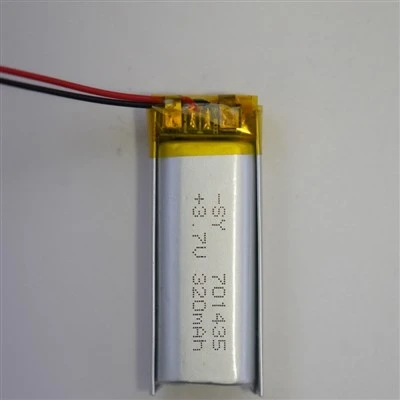
First, let’s get clear on what a 50 Series battery is, because the term gets thrown around a lot across different industries. For context, our line of 50 Series batteries refers to cells and packs built around 18650-format lithium-ion cells (the most common rechargeable cell used in everything from power tools to EVs) rated for a continuous discharge rate of up to 50 amps, hence the name. That 50A rating is a big draw for high-draw tools: a cordless drill, for example, can pull 30-40A under load, so a 50 Series battery has the headroom to handle that without overheating or dying mid-project. Laptops, on the other hand, are typically way lower-draw devices—even a 16-inch gaming laptop maxes out at around 150W, which translates to ~12.5A at 12V, or ~5A at a common 20V fast-charge input. So on paper, the 50A discharge rating is overkill for almost every laptop on the market. That’s not a bad thing, but it brings us to the first big compatibility check: voltage.
Most off-the-shelf 50 Series batteries come in 12V, 24V, and 48V nominal configurations, which is intentional for power tools and industrial use. Laptops, by contrast, almost universally run on a 3-cell or 4-cell lithium-ion battery pack, which translates to a nominal voltage of around 11.1V (3S) or 14.8V (4S). Wait a second—12V is extremely close to 11.1V, right? That seems like a win. But here’s where the fine print matters: laptop batteries are specifically calibrated for their exact voltage range. A 3S laptop pack has a maximum charge voltage of 12.6V (4.2V per cell), and a minimum cut-off voltage of around 9V, because each cell drops to ~3V when fully discharged. A 12V nominal 50 Series power tool battery, though, is almost designed for a different cut-off. Most power tools run at nominal voltage, so their 12V packs often cut off at 10V to 10.5V—below what a laptop battery management system (BMS) is programmed to handle. If a laptop detects a battery voltage below its lower threshold, it will either shut down unexpectedly to protect internal components, or refuse to charge the battery at all. That’s a problem. Some tinkerers try to fix this by adding a step-up or step-down converter to adjust the voltage, but that adds bulk, drains power, and defeats the purpose of using a compact, high-density 50 Series battery in the first place.
But wait—what about the physical fit? A lot of 50 Series batteries are designed with industry-standard form factors that overlap with small laptop battery bays. For example, our 50 Series 12V 5Ah battery pack is 106mm x 70mm x 18mm, which is roughly the size of a 6-cell laptop battery that comes in many mid-2010s ultrabooks. Our 24V 10Ah pack is large enough for a 17-inch gaming laptop that needs extra runtime. That physical overlap is why so many people get excited about this combination—on the outside, the battery looks like it could slide right into a laptop’s battery slot. The issue is the electronics, not the shape. Every laptop has two key components for the battery: the BMS (which regulates charging, discharging, and safety) and the charging port logic that communicates with the laptop’s motherboard to confirm it’s a compatible power source. Most off-the-shelf 50 Series batteries (especially the ones sold for power tools) have their own integrated BMS, but it’s not calibrated to work with laptop charging protocols. Laptop manufacturers use proprietary communication chips or standard protocols like SMBus (System Management Bus) to verify that a connected battery is approved. If the 50 Series battery’s BMS doesn’t send the right voltage, serial number, or current data, the laptop won’t recognize it. It will show an error like “Not charging” or “Unsupported battery” and stop charging entirely.
That’s not to say it’s impossible to adapt a 50 Series battery for laptop use—we’ve worked with a handful of custom PC builders and field service teams to do exactly that, but it’s not a drop-and-replace swap. For example, a team building a portable data collection laptop for construction sites (where access to power is limited) might choose to use a 50 Series battery because it can deliver consistent power even in extreme temperatures (-20°C to 60°C, which is far more rugged than most consumer laptop batteries’ 0°C to 45°C range). To make that work, they’ll have three custom solutions tailored to their specific laptop model, none of which are for casual users: first, they’ll remove the laptop’s original BMS, which means they have to build an external custom BMS that matches the 50 Series pack’s cell count and voltage range, and integrate it with the laptop’s motherboard. Second, they’ll have to bypass the laptop’s proprietary charging logic by modifying the charging port to send a constant voltage signal that the laptop accepts as valid. Third, they’ll use a battery management system with over-discharge and over-current protection that’s aligned with both the 50 Series pack’s capabilities and the laptop’s internal components. This work takes specialized electrical engineering knowledge, and even then, it voids the laptop’s warranty and the 50 Series battery’s safety certifications—something that’s non-negotiable for us as a supplier, because we stand behind our products when used as intended.
Speaking of intended use, it’s important to clarify when a 50 Series battery might actually be a better fit for a laptop than the original part. For users who aren’t concerned with a 100% stock laptop experience, 50 Series batteries shine in specific scenarios. For example, our 50 Series packs have a cycle life of up to 1,000 full charge-discharge cycles at 80% capacity, compared to the average consumer laptop battery’s 300-500 cycles. That means if you’re using the laptop for field work, where you might charge it once a day and drain it fully multiple times a week, a 50 Series battery could last twice as long between replacements. We also offer 50 Series packs with built-in Bluetooth tracking, which is a huge benefit for small businesses that manage fleets of laptops for sales reps or delivery teams—they can track battery location, charge level, and even receive alerts if a battery is damaged or misused. Another use case: ruggedized laptops used for mining or forestry, where temperatures can swing wildly, and power tools often run alongside laptops. A 50 Series battery is built to handle those harsh conditions, and many of our customers in these industries use custom adapters to integrate our packs because they’re more durable and reliable than standard laptop batteries.
But let’s address the elephant in the room: why would anyone even want to use a power tool battery in a laptop? The answer almost always comes down to runtime. A standard 6-cell laptop battery is around 50Wh, while our 50 Series 12V 10Ah pack is 120Wh—more than double the capacity, and it’s only slightly larger than a standard laptop battery. That extra runtime means a laptop can run for 8-10 hours on a single charge, instead of 3-5, which is a game-changer for users who don’t have access to power during long work trips or remote work. The problem is that that extra runtime comes with trade-offs, and those trade-offs aren’t worth it for most casual or office users. A custom-adapted laptop with a 50 Series battery will be heavier than stock (even a 500g difference is noticeable when carrying a laptop all day), it will lack the safety features of a laptop battery (like short-circuit protection that’s calibrated for the laptop’s internal components), and it will have a non-warranteed setup that can be expensive to repair if something goes wrong.
As a supplier of 50 Series batteries, we get a lot of requests for “drop-in” adapters for laptops, and we’ve considered developing a line of laptop-specific 50 Series packs. But here’s the thing: the laptop market is fragmented. There are thousands of laptop models, each with different battery form factors, voltage requirements, and charging protocols. A drop-in adapter for a 2019 MacBook Pro won’t work for a 2022 Dell XPS, and vice versa. That’s why we focus on making our 50 Series batteries versatile enough for their core markets—power tools, industrial equipment, and portable power stations—and partner with third-party electrical engineering firms to help customers build custom solutions when they need to use our packs for non-standard applications like laptops. We don’t want to sell a customer a battery that will void their laptop, or that will overheat and cause damage, so we always prioritize transparency about compatibility, instead of overpromising a one-size-fits-all solution.
If you’re a laptop user considering a 50 Series battery for extra runtime, here are a few key questions to ask before you make a purchase: First, what is my laptop’s battery voltage, nominal capacity, and charging protocol? You can find this info in your laptop’s service manual, or by checking the label on your original battery. Second, am I comfortable modifying my laptop, or working with an engineer to build a custom adapter? Third, do I need this battery for harsh conditions, or just for casual office use? If you’re using your laptop in a remote construction site or for field work, the trade-offs are often worth it. If you’re just looking for extra runtime for work from home trips, a high-capacity aftermarket laptop battery is a safer, simpler option.
For anyone who is interested in building a custom laptop with a 50 Series battery, we’re here to help. We supply our 50 Series packs to engineers, custom PC builders, and small businesses, and we can provide data sheets, cell specifications, and support to help you design a safe, reliable setup tailored to your needs. Our goal isn’t to push one-size-fits-all solutions—it’s to help you find the right power source for your specific use case, whether that’s a standard laptop battery for office work, a rugged 50 Series pack for field use, or a custom setup for any other application.
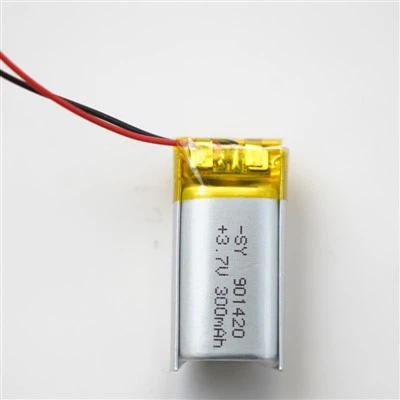
If you’re looking to discuss your power needs, or learn more about how our 50 Series batteries can work for your project, feel free to reach out to our team. We’re happy to answer questions, provide sample packs for testing, or connect you with engineering partners who specialize in custom laptop power solutions.
40 Series Battery References
- Lithium-Ion Battery Specification Standards, International Electrotechnical Commission (IEC) 62133:2017
- Laptop Battery Management System (BMS) Design Guidelines, Intel Corporation, 2021
- Power Tool Battery Discharge Rating Testing, Underwriters Laboratories (UL) 2271, 2022
- Portable Power Solution Compatibility Report, Consumer Electronics Association (CEA), 2023
Hubei Shuoyue Electronics Technology Co., Ltd.
As one of the most professional 50 series battery manufacturers and suppliers in China, we also support custom service. Please feel free to wholesale bulk cheap 50 series battery from our factory. For price consultation, contact us.
Address: Hubei Shuoyue Industrial Park Management Co., Ltd., No. 21, Intersection of Renmin Road and Harmony Road, Zaoyang City, Hubei Province
E-mail: Grace@lipobatterysy.com
WebSite: https://www.hbsy-battery.com/
