Hey everyone, thanks for swinging by my corner of the web. I’m a quartz slab supplier—you know, the person you might’ve called last week if you were shopping for countertops for your kitchen reno or a commercial bar top. Today I wanna keep it real, no sales fluff, no corporate jargon. We all know quartz is super popular right now, and for good reason: it’s durable, looks sleek, doesn’t need daily sealing like natural stone, it’s basically a workhorse for surfaces. But let’s cut to the chase—nothing’s perfect, right? Even the quartz slabs I sell have their downsides. And since I’m not gonna lie to you (honesty’s how we keep customers coming back, not just a one-off sale), I wanna break down exactly what those are, so you can make the best call for your project instead of getting blindsided later. Quartz Slab
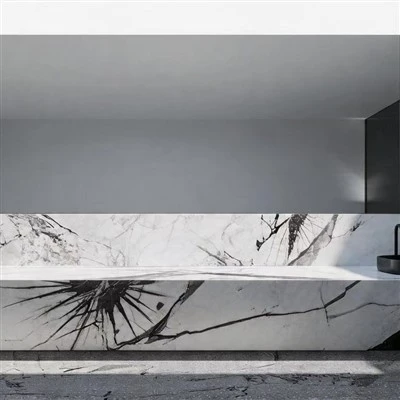
First off, let’s get one thing straight: I’m not knocking quartz. I’ve been in this game for 8 years, seen every project go smooth and every one go sideways because someone overlooked a flaw. So take this from someone who’s delivered hundreds of slabs, seen a customer cry because their kitchen counter chipped 6 months in, and knows exactly why. Let’s start with the big one that trips up almost every first-time user: heat resistance. Wait, hold on—this isn’t the old “quartz melts” myth. No, it’s more nuanced than that. Quartz slabs are mostly ground natural stone (like quartz crystal, duh) mixed with resin and pigments to bind it all together. That resin is the problem. It’s heat-resistant up to a point—usually around 150 to 200 degrees Celsius, which is like… a hot pan straight off the stove. Wait, but here’s the catch: a lot of people think “oh, my pan’s hot, that’s fine!” but nope. What happens when you set a cast iron skillet that just came off a 250-degree stove on your quartz counter? That resin can discolor, melt a little, or even leave a permanent mark. I’ve had a customer last year try to put a sous vide pot base on it and it left a weird, glossy spot they couldn’t sand out. The fix? A hot pad, trivet, something between the heat source and the slab. But way too many homeowners skip that because they heard quartz is “heatproof” and end up with a mess. Also, tiny—like, super tiny—temperature swings can cause cracking? Wait, no, only if you’re slamming a cold pan onto a hot surface, but the big heat issue is the resin. Natural granite, for example, can handle way higher temps without stress, so if heat is your main concern, you might wanna go natural stone, not quartz.
Next up: brittleness and chipping. Now, I know what you’re thinking—“it’s a hard surface, right?” Yeah, quartz scores around 7 on the Mohs hardness scale, which is harder than steel nails or glass. That means it resists scratches from knives, keys, that kind of stuff. But hardness and brittleness are two different things. Think about glass—it’s hard, but drop a small object on it and it chips, right? Quartz is the exact same. I had a guy a few months ago loading a 5-gallon water jug onto his counter, tripped a little, and the edge of the slab chipped right off. Quartz doesn’t flex like natural stone does. If you drop a heavy, sharp object on a corner or an edge, it won’t dent—it’ll crack or chip. Even regular wear and tear if you’re slamming pots and pans around. Unlike laminate, which might just scratch, quartz chips are permanent. You can do a repair, but it’s never as seamless as the original, and most of the time, you have to use a pro, which adds cost. Oh, and edges! If you’re doing a fancy beveled or ogee edge, that fine edge is way more prone to chipping than a thick, square edge. I always warn customers about that now, not after they call me panicking that their fancy edge got nicked.
Then there’s the installation part. Wait, no, not just installation—fabrication, too. Quartz slabs are heavy. Like, really heavy. A standard 3cm thick quartz slab is around 18 pounds per square foot. So a 10-foot countertop is almost 200 pounds. That means you need at least two people to carry it, sometimes three for larger, longer slabs. And if the person installing it doesn’t have experience, they can drop it, crack it, or even mess up the supports underneath. No one talks about this, but bad installation is the number one reason quartz slabs fail, not the material itself. Also, when you cut quartz for edges or to fit around a sink, you have to use diamond blades specifically made for quartz. Use the wrong blade, and the edge gets rough, chipped, or even has micro-cracks that you can’t see at first but will grow over time. I’ve seen installers try to use a regular saw blade and end up ruining a $1,000 slab, which sucks for everyone. And don’t even get me started on backlighting. If you want a quartz counter with a backlight to show off the pretty pigments, that requires cutting holes and installing LED strips, and that makes the slab way more prone to cracking because you’re removing material from a solid surface. It’s doable, but it’s risky, and not all fabricators wanna touch that job.
Another downside: cost. Wait, I know quartz is more expensive than laminate, but what I mean is, compared to some other surfaces, it’s not as cheap as people expect. A mid-range quartz slab is around $50 to $100 per square foot, installed. Natural granite is similar, but engineered quartz can get way pricier—some luxury lines with exotic pigments or extra thick slabs can go up to $200 per square foot. And wait, don’t forget the hidden costs. If you need custom cuts, edge profiles, or you have to reinforce cabinets because the slab is so heavy, that adds on. I had a customer who thought “oh, quartz is just the price of the slab” and ended up with a $1,500 extra bill for cabinet reinforcement because his old cabinets couldn’t handle the weight. Also, if you’re renting a space, or planning to renovate in 5 years, quartz doesn’t add as much resale value as natural stone or solid surface. Wait, is that true? Yeah, from what I’ve seen in the remodeling market, buyers still prefer natural stone for countertops—it feels more “premium” even if quartz is just as durable. So if you’re flipping a house to sell quickly, maybe quartz isn’t the best call, because you won’t make that money back when you sell.
Oh, and maintenance—wait, no, people think quartz is low-maintenance, which it is, but it’s not zero-maintenance. You can’t use harsh cleaners on it. Bleach, ammonia, those heavy-duty degreasers—they can dull the surface or even discolor the pigments, especially the darker quartz colors. I’ve seen a customer use a bleach-based cleaner to scrub their countertop and now there’s a weird, faded spot right by the sink. You have to use mild, pH-neutral cleaners, like dish soap or a spray made for stone surfaces. Also, if you spill acidic things like wine, lemon juice, vinegar, or coffee, you should wipe it up right away. Even though quartz is stain-resistant, it’s not stain-proof. If you leave red wine on there for 24 hours, it can seep into the resin and leave a permanent stain. Natural stone, on the other hand, can sometimes be sealed to resist stains, but if you forget to seal it, it’s even worse. But the point is, quartz isn’t “set it and forget it”—you still have to do basic upkeep, not just ignore it.
Wait, let’s talk about sustainability, because that’s a big one these days. A lot of people switch to quartz thinking it’s eco-friendly, but it’s not. The resin that binds it is a petroleum-based product, so it’s not biodegradable. And when the slab reaches the end of its life—like, 20 or 30 years from now—most quartz can’t be recycled. It’s super hard to process; the resin mixed with the quartz crystals means you can’t melt it down and make new countertops. So it just ends up in landfills, which is a problem. Natural stone, if you reclaimed it, can be repurposed, but quartz almost never is. Also, the manufacturing process—making quartz slabs uses a lot of energy, cutting the slabs creates a ton of dust, and sometimes factories use chemicals to polish them, which can be bad for the environment if they’re not disposed of properly. I know some brands are trying to make more eco-friendly quartz with recycled materials, but that’s still not widespread, and it adds to the cost.
Wait, and one more thing: appearance limits. Yeah, quartz has a ton of colors and patterns, from basic white to marble-look to even solid black. But a lot of the “natural” quartz patterns are too perfect. Like, if you look at a real marble countertop, the veins are uneven, sometimes have little knots or breaks, right? But quartz is made in a factory, so the patterns are usually uniform, almost too clean. Some people hate that—they wanna look like they have real stone, and quartz looks “fake” to them. I’ve had customers come in and say “I don’t want that fake marble look” and go with granite instead, because the flaws make it feel more authentic. Also, since it’s engineered, you can’t get unique pieces. If you want a counter with a one-of-a-kind pattern, quartz can’t do that, because every slab from the same batch will look almost identical. Natural stone, on the other hand, every slab is different, so if you pick one you love, it’s yours alone.
Okay, let’s wrap this up—so what does all this mean for you? If you’re building a new home, or renovating a kitchen that gets a lot of heavy use, quartz can be great. It’s scratch-resistant, low-maintenance (mostly), doesn’t need sealing, and comes in so many colors. But you have to go into it knowing the downsides: watch out for heat, don’t slam heavy or sharp objects on edges, hire an experienced installer, factor in extra costs for reinforcement or custom cuts, and if sustainability or resale value is your top priority, you might wanna check out natural stone instead.
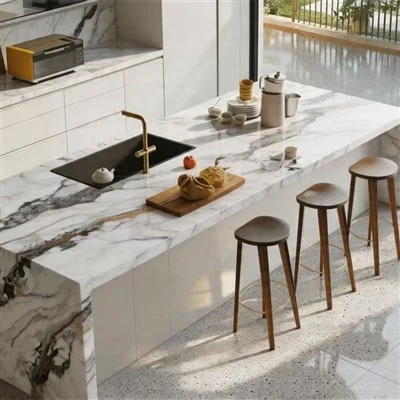
I’m not here to push quartz. I’m here to tell you the truth, so you don’t end up with a countertop that gives you grief. If you’re shopping around, wanna ask about different options, get a quote for a slab, or even just ask a quick question about installation, hit me up. I’m easy to get a hold of, no sales pitches, just straight answers.
Quartz Countertop Edges References:
- National Kitchen & Bath Association. (2022). Countertop Material Performance Report.
- Stone World Magazine. (2021). Engineered Quartz: Strengths, Weaknesses, and Market Trends.
- U.S. Department of Energy. (2020). Sustainable Building Materials: Quartz vs. Natural Stone Lifecycle Analysis.
Wuhu Junde New Material Technology Co., Ltd.
As one of the most experienced quartz slab manufacturers and suppliers in China since 1998, we warmly welcome you to wholesale top-quality quartz slab made in China here from our factory. If you have any enquiry about cooperation, please feel free to email us.
Address: No.8 Yulin Road, Xinwu Economic Development Zone, Anhui Province, China
E-mail: 1127319898@qq.com
WebSite: https://www.jundequartz.com/
