Hey everyone, I’m Jake with the pelletizer team here, and let’s cut to the chase: there’s nothing more frustrating than wrapping up a production run, or prepping for a big one, only to hit that wall where your pelletizer just… won’t start. I’ve fielded this call a hundred times—guys panicking over a line down, production targets on the line, and they’re not sure if it’s a tiny, easy fix or something way more serious. The good news? 9 times out of 10, this issue isn’t a total death sentence for your equipment. Let’s walk through this step-by-step, like I’d walk a new operator through it on a shop floor. No fancy jargon, no useless guesswork—just actual troubleshooting that works. Pelletizer
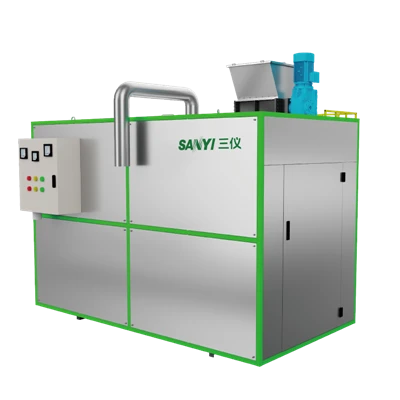
First, let’s get the most obvious stuff out of the way, because you’d be shocked how often I hear about a simple power blip that someone missed. I’m talking about the basics that get overlooked when you’re rushed. Let’s start with the main disconnect switch—yeah, the big red one mounted on the control panel or near the machine frame. People lean on it, or it jiggles loose from vibration over a shift, and suddenly there’s zero power. Double check that it’s flipped all the way to the “ON” position, no halfway business. Next up: your circuit breakers. Most modern pelletizers have a lockout/tagout panel right next to the disconnect, with breakers labeled for the motor, control system, and maybe even the feed conveyor. If one’s tripped, it’ll be in the middle position, not fully up or down. That’s a trip. Flip it all the way to OFF first, wait 10 seconds, then back to ON—this resets the overload most of the time. Pro tip from the shop floor: don’t just flip it back on immediately. I once had a customer who blew a control board because he reset a tripped breaker right away, not realizing there was a short in the wiring. Slow down here. Also, if you’re working with a pelletizer that’s got a motor starter (a lot of older or industrial models do), make sure the control fuse isn’t blown. Those little cylindrical fuses are easy to pop if you had a power surge mid-shift, and they take literally 2 minutes to replace. I always keep a few spares in my tool bag for these exact moments—you should too.
Okay, power checks done, but it still won’t crank. Next, let’s look at the safety interlocks, because pelletizers are built with these for a reason—and 90% of the time, they’re the culprit here. Let’s be real: safety interlocks are a pain, but they stop people from getting their hands caught in moving parts, so we don’t mess with ’em. First, check the feed hopper gate. If you’ve got a pelletizer that feeds from a hopper, that gate has to be fully closed to start the machine. Half-open, or even a tiny gap, and the interlock won’t disengage. I’ve seen operators get in a hurry and push the gate shut with their knee, but that doesn’t always trigger the sensor—make sure it’s latched all the way. Next: the safety door on the side of the cutting chamber. That door has a interlock pin that has to line up with the sensor when it’s closed. If the pin got bent, or the sensor got knocked out of alignment when you were cleaning the chamber last shift, the machine won’t start. Pop the door open, inspect the pin—no bends, it’s not covered in plastic shavings or dust that’s blocking it—and then close it slowly until you hear that click that means it’s latched. Another common one: the emergency stop button. Everyone pushes that when something goes wrong mid-shift, and then forgets to twist it back out when they reset the machine. They’re bright red, usually mushroom-shaped, so they’re hard to miss—but I swear, half the calls I get start with “I pushed the E-stop, but I thought I fixed it”. Twist that button clockwise firmly until it pops back up, then try starting again. One more interlock check: if your pelletizer has a conveyor that feeds material to it, make sure that conveyor’s fully stopped and in “home” position. Some systems are linked so the pelletizer can’t start if the feed line isn’t idle—prevents material backing up. If that conveyor was running when you powered down, it might be holding the interlock. A quick reset of the conveyor’s control panel usually fixes that.
Cool, interlocks are all good, power is flowing, still nothing. Let’s move to motor and drive issues, because if the machine isn’t even humming when you hit start, it’s probably the motor or the drive system. First, listen for any sound when you hit the start button. If you hear a low grinding or a hum, that’s different than nothing at all. A grinding sound usually means the motor is trying to turn but something’s locked up. What’s locked? Let’s check the cutting chamber. If you had material leftover from the last run, or even a piece of metal that fell into the hopper and got shredded, that’s a jam. You can’t start the pelletizer if the cutting blades or the flywheel are locked tight. To check this, you’ll need to turn the flywheel manually—most pelletizers have a big bolt on the end of the motor shaft, or a hand crank, for this exact job. Before you do anything, make sure the main disconnect is off, no power to the machine. Put a wrench on that bolt, and turn it slowly by hand. If it won’t budge, that’s definitely a jam. If it moves a little but sticks at a certain point, that’s a chunk of plastic or metal caught between the blades and the chamber wall. Don’t force it—you’ll bend the blades or break the motor. Use a small pry bar to gently work that chunk loose, or if it’s metal, pull it out with a magnet (never use your hands, obviously). Once it moves freely by hand, try starting it again. Another common motor issue: overload. The motor’s thermal protector kicks in if it got too hot from running nonstop with a heavy load, or if ventilation was blocked by dust buildup. Most pelletizers have a reset button on the motor housing—usually a small red button you have to press firmly. Wait 15 minutes before pressing it, though, because if the motor’s still hot, the protector won’t reset. Speaking of heat, check the motor’s ventilation slots—if they’re caked with plastic dust or wood shavings, that’s blocking airflow, making it overheat. A quick blast of compressed air will clean that out fast. Now, if when you hit start, there’s a click, then nothing, no hum, no grind, that’s usually a drive issue. The variable frequency drive (VFD) that controls the motor might have a fault code. Most modern VFDs have a small digital display that flashes a code—common ones are “OV” for overvoltage, “UV” for undervoltage, or “OC” for overcurrent. Flip to the user manual that came with your pelletizer (keep it near the control panel, I beg you) and look up that code. Undervoltage is usually a sign of a weak circuit or a too-long extension cord (don’t use a 50-foot cord for a 3-phase motor, that drops voltage too much). Overcurrent is usually linked to a jam we already checked, but if the code comes back with no jam, it might be a bad drive. If you see a fault code, the easiest fix is to turn off the power to the VFD, wait 5 minutes, then turn it back on to reset it. That clears most minor faults.
Wait, we’ve gone through power, interlocks, motor, drive—what about control system issues? Sometimes it’s not the big parts, it’s the little control panel glitches. If your pelletizer has a touchscreen control (a lot of newer models do), that’s a common spot for small problems. First, make sure the touchscreen isn’t frozen. If pressing the start button doesn’t do anything, power off the control panel completely, wait 30 seconds, then turn it back on. If the screen is unresponsive or shows a blank white or blue screen, it might just be a software glitch—most control systems have a built-in reset that does exactly that. If you’re using a button-based control panel instead of a touchscreen, check the start button itself. Sometimes the contact inside wears out from use, so it doesn’t send the signal to start the motor. Test it by pressing other buttons—like stop or emergency reset—to see if they work. If other buttons are fine, it might be the start button that’s faulty. A quick replacement is cheap, and you can usually get a spare from the parts shelf in your shop. Another control check: the speed setting. Wait a second—did someone accidentally set the motor speed to zero or super low? A lot of pelletizers only let you start them if the speed is above a minimum threshold, usually 10% or higher. I’ve had this happen so many times when operators are testing settings before a run. Double check the speed dial or the touchscreen input to make sure it’s not turned all the way down. That’s a 2-second fix, but it’ll leave you scratching your head for 20 minutes if you miss it.
Okay, all that checks out, and it still won’t start. What next? Don’t panic, and don’t start taking apart the whole machine yet. Let’s talk about when it’s time to call for backup. If you’ve gone through every single step here and nothing works, it’s probably not a simple jam or a loose wire. It could be a bad motor winding, a faulty sensor, a wiring harness that’s frayed inside the insulation—stuff that needs a trained eye. Here’s the thing: when you’re troubleshooting, always prioritize safety first, and don’t force parts. If something feels off, or you see sparks when you check the power, or the motor is making a weird burning smell, cut the power immediately. No point in making a small problem into a dangerous one.
Now, let’s talk about preventing this, because the best troubleshooting is avoiding the issue altogether. I always tell my customers two things: first, clean your pelletizer after every run. Plastic shavings and dust build up in the cutting chamber, on the motor, and around sensors, and that’s 70% of the jams and interlock issues. Second, do a pre-start check every shift, not just when it breaks. Flip the E-stop to make sure it pops back, check the interlock pins, make sure the breaker isn’t tripped, and turn the flywheel by hand once to make sure it moves freely. That 5-minute check saves hours of downtime.
At the end of the day, most pelletizer start issues are easy fixes, no need to stress. I’ve seen a customer spend 2 hours tearing apart their machine because the E-stop was twisted in, and another one who thought their motor was blown because the feed gate wasn’t fully closed. The key is to take it step by step, start with the simplest stuff, and don’t overcomplicate it. If you’ve gone through all the steps I laid out here and it’s still not working, that’s when it’s time to reach out to the team. We don’t do pushy sales here—we just want to help you get your line back up and running, whether that’s troubleshooting over the phone or getting you a replacement part fast. Just send a note over, and we’ll walk through it with you, no hoops to jump through.
Equipment for The Safe Disposal Of Small Animal Carcasses Now, for the references, these are standard industry resources we use to make sure all this info is accurate, no fancy links needed.
Shandong Heze Sanyi Biological Engineering Co., Ltd.
Shandong Heze Sanyi Biological Engineering Co., Ltd. is one of the most reliable pelletizer manufacturers and suppliers in China, also supports customized service. We warmly welcome you to buy CE approved pelletizer made in China here from our factory.
Address: No.1118 Lanzhou Road, High-tech Zone, Heze City.
E-mail: business@hzsysam.com
WebSite: https://www.hzsysam.com/
