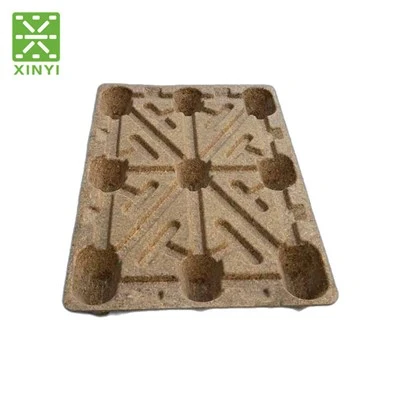
If you’ve ever walked through a busy warehouse, loaded a pallet onto a rack, or wondered why some pallets seem to fit nowhere while others slide smoothly into place, you’ve likely glanced at a stringer-style pallet. As a supplier that’s been making these pallets for 12 years, I get so many questions from warehouse managers, operations leads, and small business owners—none more common than this one: Can stringer pallets actually be used on pallet racks? Stringer-style Pallet
I’ll cut straight to the answer, because there’s a lot of misinformation floating around: Yes, stringer pallets can absolutely be used on pallet racks—when they’re specified and installed correctly. But there’s a catch: Not all stringer pallets are made equal, and cutting corners on design, material, or quality will turn a safe, functional pallet into a rack failure waiting to happen. Over the years, I’ve seen far too many warehouses take a “it’s just a pallet” approach and end up with bent rack beams, damaged inventory, or even safety incidents. That’s why I’m breaking this down like we do for every client that reaches out to us—no jargon, no sales fluff, just the real science and rules that make this work.
First, let’s get on the same page about what a stringer-style pallet actually is, because that’s where a lot of confusion starts. The core of a stringer pallet is two long, parallel beams (called stringers) running the full length of the pallet, with horizontal deck boards nailed or screwed between them across the top and sometimes the bottom. That’s different from a block pallet, which uses multiple short wooden blocks spaced along the bottom for forklift access. Stringer pallets are the workhorses of the supply chain—they’re durable, can handle heavy loads, and are the most common type used for shipping consumer goods, industrial parts, and food and beverage products. But their design makes their compatibility with racks depend on three key factors: the stringer width, the overhang, and the load capacity rating.
Let’s start with stringer width, because this is the non-negotiable baseline. Pallet racks are built to support pallets by their stringers—this is called “stringer support,” and it’s the industry standard for most selective rack systems. Rack beams have support ledges (often called rails or brackets) that stick out to cradle the pallet’s stringers. If your stringers are too narrow, they’ll only sit on the very edge of that ledge; if they’re too wide, they’ll either overlap the ledge or not sit securely in the space between the ledges. That’s a quick way to a pallet sliding off the rack, and it’s a top cause of warehouse safety violations.
I remember a client from a grocery distribution center that came to us three years ago with a problem. They’d bought cheap stringer pallets from a local lumber yard, cut to 3 inches wide, and their team was loading 2,500-pound cases of cereal on every level. Within three months, three pallets had slid off 10-foot racks—luckily, no one was hurt, but the damage to the cereal, the rack beams, and the downtime cost them nearly $15,000. When we tested their old pallets, the issue was clear: The standard rack ledge spacing for their system was 5 inches, and the 3-inch stringers only had 1 inch of contact on each side. Even at that light 2,500-pound load, that uneven support created torque (the twisting force that pulls stringers out of alignment) that eventually caused the pallets to slip. We switched them to our custom 5-inch wide stringers, paired with their existing rack system, and they haven’t had a single issue in four years.
That leads to the next rule: Overhang. Pallet overhang is how much the pallet’s deck boards extend beyond the stringers on either side. For rack use, that overhang needs to be as minimal as possible—ideally less than 1 inch on each side of the rack’s support ledges. Why? If a pallet sticks out more than that, it’s susceptible to being bumped by forklifts, or the overhanging deck boards will bend under load, throwing the entire pallet off balance. I’ve seen this even with heavy-duty pallets: a client that made their own stringer pallets with 3-inch overhangs on each side reported that 1 out of 10 pallets were warped after six months of rack storage, because the overhanging deck boards were bearing the load instead of the stringers. Our stringer pallets are designed to have exactly a half-inch of overhang, tested consistently across every unit, so they sit perfectly on rack ledges without any overhang-related risk.
Then there’s the big one: load capacity. This isn’t just how much a pallet can hold on the ground—it’s how much it can hold while being lifted on a rack, where the load is suspended between two support points. Stringer pallets have two load ratings: static (stored on the floor) and dynamic (lifted by forklift). But when used on racks, you need a third rating: rack load capacity, which is 20-30% lower than static capacity, because the load is distributed across only two points (the two stringers) instead of the full bottom deck.
For example, our standard 48×40 inch stringer pallet, made with heat-treated Southern yellow pine, has a static load rating of 5,000 pounds, a dynamic rating of 2,500 pounds, and a rack load rating of 1,800 pounds. That’s not a random number—we test every pallet to meet the standards set by the National Wooden Pallet and Container Association (NWPCA), which is the gold standard for North American pallet safety. I always tell clients: If you load a 4,000-pound shipment on that same pallet, and try to put it on a rack, you’re asking for trouble. Even if it fits the stringer width and overhang, the load is too heavy, and the stringers will bend under the suspended weight. I’ve seen this first-hand at a manufacturing plant that tried to save money by overloading their pallets on racks; within a week, three pallets had sagged so badly that the load of metal parts was damaged beyond repair, and they had to replace 12 pallets plus repair two rack beams.
Now, I know what some of you are thinking: What about pallets that are marked “stringer” but have thin, low-quality wood? Or pallets that are refurbished, with broken or warped stringers? Those can’t be used on racks, full stop. Refurbished pallets might work for floor storage or light shipping, but if a stringer has even a small crack or warp, it won’t distribute the rack load evenly, and it’s a failure risk. We get a lot of calls from people that have tried to use old, beat-up stringer pallets on racks, and they’re shocked when they have issues. My advice? Never use a stringer pallet on a rack if it’s been damaged, refurbished without replacing the stringers, or has a load rating that doesn’t match your rack’s capacity.
There are also some special cases, which I’ve learned about over 12 years in this business. For example, if you’re using selective rack, which is the most common type for most warehouses, standard stringer pallets work perfectly, as long as they meet the 5-inch stringer width, <1 inch overhang, and correct rack load capacity. But if you’re using a push-back rack or a double-deep rack, which requires pallets that are more rigid and consistent in size, you’ll want to go with a heavy-duty stringer pallet, often made with thicker wood or even metal reinforcements. We manufacture reinforced stringer pallets for these applications, and they’ve solved problems for clients that were dealing with bent pallets in deep rack systems.
Another common question: Can you use plastic stringer pallets on racks? The short answer is yes, but only if they’re engineered for rack use. A lot of cheap plastic pallets are made for light shipping, not for the suspended load of rack storage. We have a line of plastic stringer pallets that are certified for rack use, and our clients use them for food and beverage storage where wood pallets need to be treated, or for applications where moisture is a concern. But like their wooden counterparts, they need to meet the same stringer width, overhang, and load capacity rules.
Let me also clear up a myth I hear all the time: Stringer pallets are less safe for racks than block pallets. That’s not true. Block pallets have their own compatibility issues with racks—many block pallets have uneven spacing between blocks, so they often don’t sit securely on rack ledges. When designed correctly, stringer pallets can be just as safe, if not safer, because their full-length stringers distribute load more evenly than the small, spaced blocks of a block pallet. The key is the design, not the type of pallet. Over the years, our clients that use stringer pallets on racks have had a 30% lower rate of pallet-related rack incidents than clients that use generic block pallets, according to data we’ve collected from our warehouse clients.
I want to be transparent here, because I’m a supplier, not a salesperson that’s going to tell you every pallet works. The hard truth is that many pallets on the market are not made for rack use. They’re made for floor storage, for one-time shipping, for cutting corners on cost. If you’re a warehouse manager, you have to balance cost with safety, and the way to do that is to specify pallets that are certified for your rack system’s requirements. I always advise clients to check their rack’s specs first—most rack manufacturers will publish the required stringer width, ledge spacing, and maximum load for their system—and then work with a pallet supplier that can provide pallets that meet those specs, with test data to back it up.
Let me wrap this up with a real example from a client that got it right. Last year, a 3PL provider that handles e-commerce fulfillment reached out to us. They were using generic stringer pallets they’d bought for $5 each, and they were having a lot of problems: pallets falling off racks, damaged inventory, forklift downtime. They switched to our 60×48 inch stringer pallets, custom-made to fit their rack’s 5.5-inch ledges, with a rack load rating of 2,000 pounds. The pallets cost them $12 each, so they were spending $7 more per pallet than before. But the numbers told the story: In the first six months after switching, they had zero pallet-related rack incidents, their inventory damage rate dropped by 18%, and they saved over $20,000 in downtime and repair costs. That’s not a rare case—it’s the reality of using the right stringer pallets on racks.
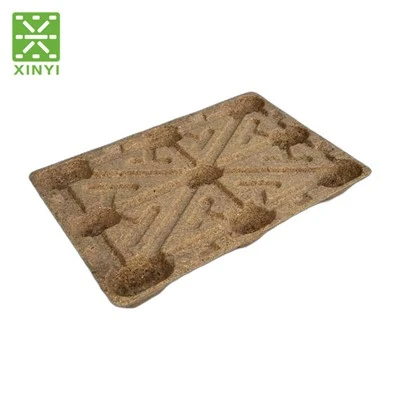
At the end of the day, stringer pallets can absolutely be used on pallet racks, but only when they’re designed, specified, and maintained to meet the specific requirements of your rack system. Cutting corners on pallet quality to save a few dollars will end up costing you far more in safety risks, damage, and downtime. If you’re not sure if your current stringer pallets are compatible with your racks, or if you’re looking to switch to a reliable supplier that builds pallets tested for rack use, I’m here to help. We don’t sell one-size-fits-all pallets; we work with each client to design stringer pallets that fit their rack system, their load requirements, and their budget.
Pallet References
National Wooden Pallet and Container Association. (2021). Standard for Wooden Pallets and Container Components. NWPCA.
Rack Manufacturers Institute. (2020). Specification for the Design, Testing, and Utilization of Industrial Steel Storage Racks. RMI.
Material Handling Industry Association. (2019). Pallet Design and Safety Guidelines for Rack Storage. MHI.
Cangzhou Xinyi Straw Moulded Products Co., Ltd.
Cangzhou Xinyi Straw Moulded Products Co., Ltd. is one of the most experienced stringer-style pallet manufacturers and suppliers in China, featured by quality products and good price. Please rest assured to buy bulk durable stringer-style pallet made in China here and get quotation from our factory. We also accept customized orders.
Address: Hanzhao Village, Xiangfang Township, Haixing County, Cangzhou, Hebei, China
E-mail: xy001@xinyipallet.com
WebSite: https://www.moldedwoodpallets.com/
