Hey everyone, thanks for stopping by my little corner of the web. I’m Mike, and for the past 12 years, I’ve been running a porcelain insulators supply company—you know, the stuff that keeps power lines humming and industrial equipment safe. More times than I can count, I’ve gotten the same question from clients, electricians, even hobbyists messing around with old power pole parts: “Do porcelain insulators conduct electricity?” It’s such a basic question, but there’s way more to it than a simple yes or no. Let’s break this down like I do when I’m walking a new client through our warehouse. Porcelain Insulators
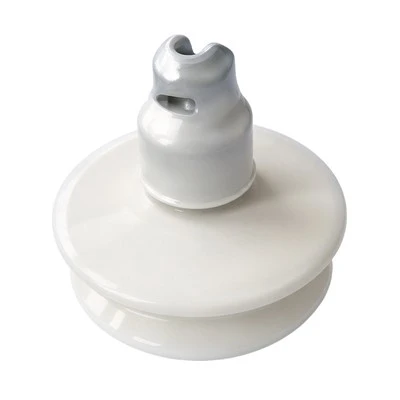
First off, let’s get one thing straight—porcelain itself, in its purest, fired, glazed state, is what we call a dielectric. That’s just a fancy way to say it doesn’t conduct electricity at all… under normal conditions. Wait, hold on, don’t go closing this tab yet—I know “dielectric” sounds like textbook jargon, but stick with me. I’ve seen way too many people hear that and think “so they’re perfect” without realizing there are caveats.
Porcelain is basically a mix of clay, feldspar, and silica, right? We fire it at like 2,600 degrees Fahrenheit to make that hard, smooth ceramic. Then we glaze it to seal the tiny microscopic pores that are left after firing. That glaze is key here—without it, moisture would seep into those pores, and suddenly you’ve got a path for electricity to flow. But when it’s properly made, glazed, and installed, porcelain insulators hold up way better than a lot of folks give them credit for. I’ve had clients tell me they thought porcelain was “outdated” compared to plastic or composite insulators, but let’s be real—for high-voltage lines, heavy industrial equipment, and even substation transformers, porcelain still beats a lot of alternatives. It’s rugged, fire-resistant, doesn’t break down from UV light like plastic does, and yeah, it doesn’t conduct electricity when it’s in good shape.
But here’s where the confusion hits: I’ve been to job sites where a power line was going out, and someone said “the insulator must have gone bad because it’s conducting.” Well, that’s usually not the insulator itself being bad—it’s what’s on it. Porcelain insulators are designed to keep electricity trapped in the wires, so they don’t arc over to the pole or the ground. But if there’s dirt, salt, bird droppings, or even a crack in the glaze, that changes things. Let’s say you’re in a coastal area, where salt spray gets everywhere. That salt mixes with moisture, and it creates a conductive layer on the insulator’s surface. Suddenly, instead of the electricity staying in the wire, it’s jumping across that dirty layer to the pole. Same with industrial sites where there’s dust or chemical residue—build up that stuff up over months, and even the best porcelain will start to act like a conductor.
Another big one is moisture in general. Wait, I just said porcelain doesn’t conduct, but if you leave a raw, unglazed piece of porcelain out in the rain, it will absorb water. And water, even pure water, has a tiny amount of conductivity. Add in minerals from rain or ground water, and that conductivity goes up. But here’s the thing—we glaze our insulators to prevent that absorption. The glaze is like a waterproof shield. But if that glaze chips or cracks from impact (I’ve seen forklifts knock a few off pallets before, ugh, never fun), then moisture can get in. Once it’s in, the porcelain starts to break down from the inside, and over time, that leads to what’s called “tracking”—where electricity creates a small, conductive path along the surface of the porcelain. It’s not full conduction, but it’s enough to mess with the insulator’s job, leading to power outages.
I get why people mix this up. A lot of newer insulator types, like composite ones, are made with materials that are more resistant to surface buildup, so they seem “better” at not conducting. But porcelain’s whole thing is that when it’s maintained, it’s super reliable. I had a client last year who was working on a 40-year-old power line that had original porcelain insulators. They thought they’d have to replace half of them, but we tested every single one, and only 7% needed replacement—all because of surface dirt, not the porcelain itself being a conductor. That stuck with me, because it’s proof that porcelain isn’t some obsolete material; it’s just that you have to take care of it, same as anything else.
Now, let’s talk about the myths I hear all the time. One guy once told me “porcelain conducts electricity when it’s hot.” No, not really. High temperatures—like the ones from a small arc, not a wildfire—don’t make glazed porcelain conductive. What does happen is that extreme heat can crack the glaze, which brings us back to that surface buildup issue. Another myth: “all ceramic is the same, so ceramic insulators are just as good as porcelain.” Nope. Porcelain is a specific type of ceramic, made with that clay-feldspar-silica mix fired at high temperatures. Some cheaper ceramics have more impurities, which can make them more prone to conduction when wet, which is why we only use high-grade materials for our insulators.
Here’s the practical side for anyone dealing with this—whether you’re a line tech, a plant manager, or just curious. If you’re inspecting insulators, don’t just check for cracks in the porcelain. Look at the glaze condition, the surface for dirt or grime buildup, especially in humid or coastal areas. For harsh environments, we also offer specialty coated porcelain insulators that are more resistant to salt and chemicals. I can’t tell you how many times we’ve recommended those to clients in places like Florida or the Gulf Coast, and they’ve cut their insulator replacement costs by almost half.
Wait, let’s circle back to the original question one more time, because I don’t want anyone walking away confused. Do porcelain insulators conduct electricity? Short answer: No, when they’re properly manufactured, glazed, and maintained. The long answer: They can show conductive behavior if they’re damaged, dirty, or exposed to too much moisture without that glaze barrier. That’s not a flaw in the material itself—that’s a flaw in how the insulator is treated over time.
I’ve been in this business long enough to know that there’s a lot of misinformation online about insulators. A lot of “tech guys” will say porcelain is dead, that composite insulators are the only way. But I’ve seen composite insulators get chewed up by UV light in just 5 years, while a well-made porcelain insulator is still going strong after 30. It’s not about one being better than the other—it’s about knowing what you need. For high-voltage transmission lines, heavy industrial machinery, substations, even older retro projects, porcelain is still the go-to for a reason.

If you’re shopping for insulators, whether you’re replacing old ones, outfitting a new project, or just curious, let me tell you—don’t go by the online rumors. Porcelain insulators aren’t conductors, but they’re not indestructible either. The best way to make sure they work? Work with someone who actually knows the material, not just a sales team that’s pushing the latest composite thing. We’ve been supplying porcelain insulators for over a decade, and we’ve worked with every type of client, from small farm operations to big utility companies. We can help you pick the right type for your environment, answer any questions you have about conductivity, maintenance, or anything else.
Power Line Fittings If you’re tired of dealing with insulators that fail when you don’t expect them, or you just need to swap out old ones on a project, reach out to me. No fancy sales pitches, no hidden fees—just straight talk about what works, and why. I’m happy to walk you through different options, show you samples, or even send over specs for what you need. At the end of the day, my job isn’t just to sell insulators—it’s to make sure my customers have something that works, so they don’t have to deal with the headache of power outages or equipment failures.
References
- Electrical Insulators: Materials, Properties, and Applications, Taylor & Francis, 2018
- Porcelain Insulators for High-Voltage Systems, IEEE Transactions on Power Delivery, Vol. 32, No. 2, 2017
- Effects of Surface Contamination on Porcelain Insulator Performance, National Renewable Energy Laboratory, 2020
- Ceramic Materials for Electrical Insulation, Wiley, 2019
Jiangxi Xinhuang Electric Co., Ltd.
As one of the most professional porcelain insulators manufacturers and suppliers in China, we also support customized service. We warmly welcome you to wholesale high quality porcelain insulators for sale here from our factory. If you have any enquiry about quotation, please feel free to email us.
Address: Luxi County Industrial Park, Pingxiang City, Jiangxi Province
E-mail: 13879942825@163.com
WebSite: https://www.jxxhpc.com/
