Hey there, Air Compressor
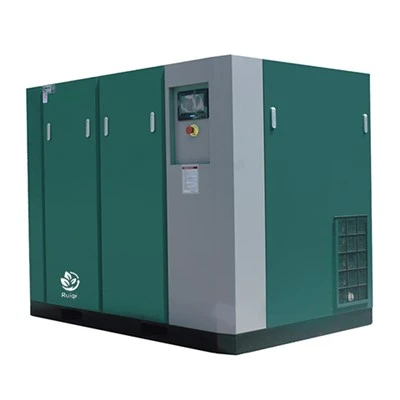
Let’s cut to the chase—if you’ve ever shopped for an air compressor, you’ve probably seen the term “duty cycle” somewhere on the spec sheet. Maybe you glossed over it, thought it was just another industry jargon, and moved on to look at CFM or PSI. But here’s the thing: as someone who’s been selling air compressors for (ugh, fine) 10+ years, I can tell you that ignoring duty cycle is the #1 mistake I see new buyers make. It’s not a random number—it dictates how often you can actually use your compressor without it turning into a doorstop, or worse, costing you way more in repairs down the line. Today, we’re breaking down exactly how it works, why it matters for your setup, and how to pick the right one for you.
First, let’s keep it simple: what even is a duty cycle? Most of the time, it’s written as a percentage, like 50% or 100%. The basic definition? It’s how long your air compressor can run continuously before it needs to shut down to cool off, all within a 10-minute window. So a 50% duty cycle means: over 10 minutes, it can run nonstop for 5 minutes, then sits idle (or “rests”) for the other 5. A 100% duty cycle? That means it can run 10 minutes straight—no breaks. Easy enough, right? But here’s where people mess up: they see a cheap compressor with a high CFM and think, “Great, this will power all my tools.” But if that cheap unit has a 30% duty cycle, it’ll overheat so fast you’ll only get 3 minutes of use before it cuts out. For context, a 18-gauge brad nailer runs at about 2 CFM, a paint sprayer is 10–15 CFM, and a jackhammer? Way higher. If you’re running tools back-to-back, that 30% duty cycle compressor is going to die in weeks.
Let’s talk about who this hits hardest. If you’re a hobbyist who only uses your compressor on weekends—inflating tires, nailing a shelf, maybe sanding a small project—a low duty cycle (30–50%) is totally fine. You don’t need to run it for hours at a time. But if you’re a small contractor, a mobile mechanic, a shop owner, or someone running a production line where you’re using your compressor every hour? You need a higher duty cycle (75–100%). I recently had a customer, let’s call him Mike, who bought a super cheap 60-gallon compressor for his auto repair side hustle. He thought the 5.5 CFM was enough for his impact wrench. But that compressor was only 40% duty cycle—he was using it 8 hours a day, 5 days a week. Six weeks later, the motor seized up. He spent twice the cost of a decent 75% duty cycle unit on repairs. That’s the kind of mistake duty cycle causes every single day.
Now, why does duty cycle even exist? Air compressors have a motor, a pump, and cooling systems. When the motor runs, it generates heat—lots of it. If you don’t let that heat dissipate, the windings in the motor can burn out, the pump can wear prematurely, and suddenly you’re left with a paperweight. Think of it like your phone: if you use it nonstop while it’s charging, it gets hot, slows down, and eventually the battery dies faster. Your compressor is the same way. The duty cycle is the manufacturer’s way of telling you “this is the sweet spot to keep your gear running long.” Cheap, entry-level compressors cut corners on cooling systems—smaller radiators, weaker fans, cheaper motors—so they can’t handle long runs. That’s why their duty cycles are low. More expensive, industrial-grade units have beefed-up cooling, larger pumps, and heavier-duty motors, so they can run longer.
Wait, but what if you do have a low duty cycle compressor and you need to run it more? Can you force it? Let’s be real, you could—but I’d be lying if I said it’s a good idea. I’ve seen guys run small 50% duty cycle compressors for 12 hours straight, just to get a job done. But what happens next? The motor’s insulation breaks down, the pump’s bearings wear out fast, and before you know it, you’re replacing the entire unit. I once had a guy bring in a compressor that had burned out because he ran it for 10 hours straight for a roofing job. The repair cost was $400—more than a mid-duty unit would’ve cost him in the first place. It’s not worth cutting corners to save a few bucks upfront.
Another common question: does tank size tie into duty cycle? Oh, it’s related, but not the same. A lot of people think a bigger tank = higher duty cycle, but that’s a mix-up. A 60-gallon tank holds more compressed air, so you can run tools longer before the compressor has to kick on to refill. But if that 60-gallon tank is paired with a 30% duty cycle motor, even with a full tank, you’ll still run out of air and have a compressor that can’t keep up. Let’s test this: say you have a 30-gallon, 100% duty cycle compressor, and a 60-gallon, 40% duty cycle one. If you’re running tools for 4 hours straight, the 100% duty cycle small tank will outperform the big tank with a bad duty cycle every time. Tank size is for how much air you can store; duty cycle is for how long you can make that air.
Let’s get into real-world examples so you can see exactly what to look for. If you’re a hobbyist: maybe you build furniture in your garage, use a brad nailer and a finish sander a few times a month. A 1.5 HP, 30–50% duty cycle, 20–30 gallon compressor is perfect. It’ll handle your occasional use, not cost a fortune, and won’t overheat. If you’re a mobile mechanic: you’re using an impact wrench, air ratchets, and maybe a tire inflator every day. You need at least a 2 HP, 75% duty cycle, 60-gallon compressor. That way, you can run those tools for hours without the compressor taking a 10-minute break every 5 minutes. If you’re a wood shop where you’re running a paint sprayer, drum sander, and air knives all day? Go 100% duty cycle, 3–5 HP, 80+ gallon tank. That’s the kind of setup that will run your shop for years, no breakdowns mid-job.
I should also mention that some brands fudge duty cycle numbers. I’ve seen “60% duty cycle” on a unit that only runs 2 minutes before needing 8 minutes to cool. That’s not a real 60%—that’s a marketing gimmick. That’s why it matters to buy from a supplier you trust. We don’t do that. Our specs are straight: if we say 75% duty cycle, that means over 10 minutes, it runs 7.5 minutes, only 2.5 to cool. No fine print, no hidden tricks. We’ve tested every unit, so you know exactly what you’re getting.
Another angle: energy costs. You might think a lower duty cycle compressor uses less power, but actually, when you’re forcing a low duty cycle unit to run nonstop to keep up, it’s working harder, using more electricity, and wearing out faster. I did the math once for a small contractor customer: he was using a cheap 40% duty cycle compressor that cost $300 upfront. His energy bill was $120 a month, and he replaced it every 18 months. A 75% duty cycle compressor cost $800 upfront, but his energy bill was $55 a month, and it lasted 7 years. Over 7 years, he spent $300 + (1218) = $516 on the cheap unit, vs $800 + (5584) = $5420 on the good one. Wait, that’s not a typo—way more expensive long-term. Duty cycle isn’t just about avoiding repairs; it’s about saving money on power too.
What about environment? If you’re working in a hot space—like a shop with no AC, or a job site in 90°F heat—your compressor will overheat faster. That means your effective duty cycle is lower than the spec sheet. So if you’re in a hot climate, bump up your duty cycle needs. A 75% duty cycle unit in a cool garage is great, but in a job site trailer that hits 100°F, you might need a 100% duty cycle to avoid cutting out. I always tell customers to add 10–15% to their duty cycle requirement if they’re in a hot, unventilated space.
Let’s wrap this up with a quick checklist so you don’t forget:
- Know your use case: hobbyist, small business, industrial?
- Match duty cycle to how long you’ll run tools: <2hrs/week = 30–50%; 2–8hrs/week = 50–75%; >8hrs/week = 75–100%
- Don’t confuse tank size with duty cycle: bigger tank = more air storage, not more run time
- Account for heat: hot spaces need a higher duty cycle
- Buy from a supplier with real specs, not marketing fluff
If you’re still unsure which compressor fits your needs, don’t guess. I’ve helped hundreds of people—from first-time buyers to seasoned contractors—pick the right unit for their job. I can walk you through exactly what you need, answer any questions about duty cycles, CFM, PSI, whatever, and make sure you don’t waste money on a compressor that’ll die on you. Skip the headache of burned-out motors, wasted energy, and extra repair costs. Hit us up to connect and talk through your air compressor needs today.
Air Treatment Equipment References:
- Compressed Air and Gas Institute. (2021). Air Compressor Duty Cycle Standards and Best Practices.
- Occupational Safety and Health Administration (OSHA). (2020). Industrial Motor and Equipment Heat Management Guidelines.
- U.S. Department of Energy. (2019. Energy Efficiency Guide for Air Compressor Selection and Operation.
- Industrial Plant Equipment Association. (2022. Small Business Air Compressor Buying and Maintenance Guide.
- Society of Manufacturing Engineers. (2021. Duty Cycle Impacts on Air Compressor Longevity and Operational Costs.
Suzhou Ruiqi Intelligent Equipment Co., Ltd.
As one of the most professional air compressor manufacturers and suppliers in China, we also support custom service. As we have world-leading production equipment and strong manufacturing capabilities, we warmly welcome you to buy high quality air compressor made in China here from our factory. Contact us for pricelist.
Address: No. 1729, Zhongshan South Road, Wujiang District, Suzhou City, Jiangsu Province, China, 16th Floor
E-mail: wts476626494@126.com
WebSite: https://www.ruiqicomp.com/
